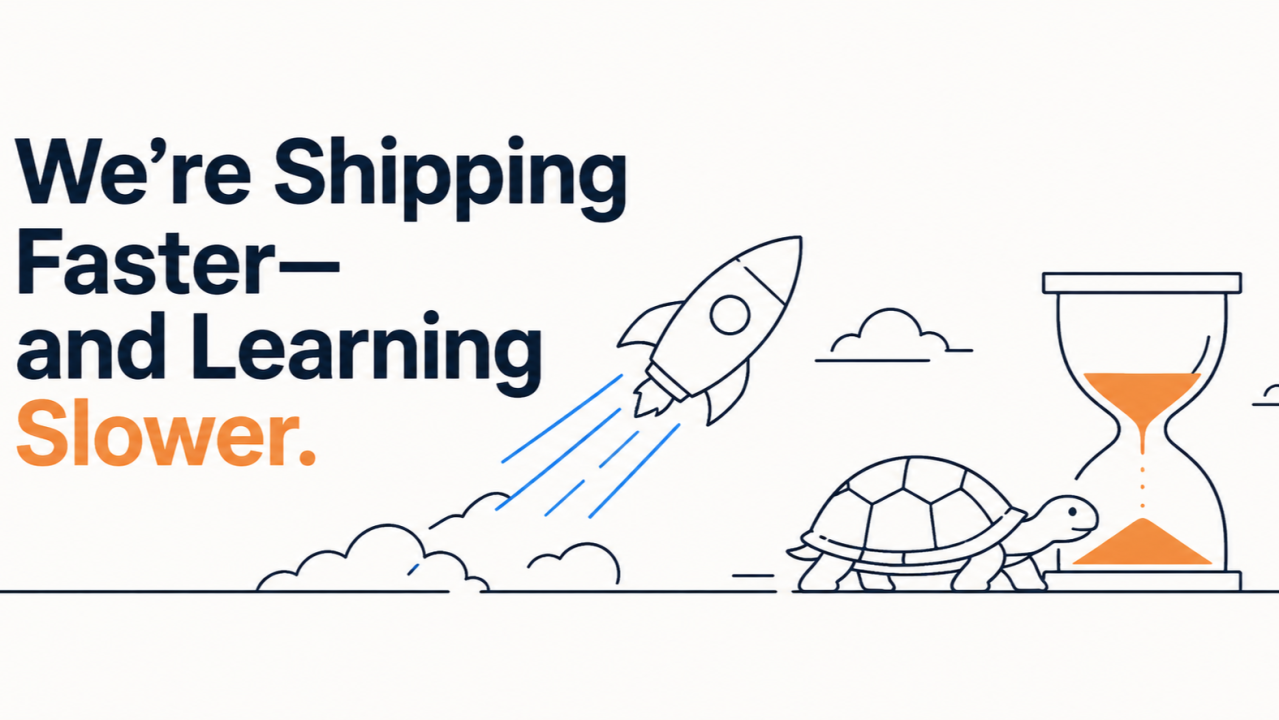
We’re Shipping Faster—and Learning Slower
One thing my team has been running into lately caught me off guard.
We are moving faster. No question. Features that used to take days are showing up in hours. That part is real. But we’re also finding problems later than we used to.
Before AI, a lot of requirements got figured out in the middle of building. A developer would hit something unclear, ask a question, and suddenly you’d uncover three edge cases no one had written down. It wasn’t efficient, but it forced clarity early. Now the model just builds. It takes what you give it and runs.
At first glance, that seems like a win. Less friction, more output. But that friction was doing something important. It was surfacing gaps.
Without it, those gaps don’t disappear. They wait.
We’re seeing them show up in testing and UAT instead. Entire behaviors that weren’t defined. Flows that mostly work but break under real usage. Now we’re writing new stories late, reworking logic, and looping back through validation. If you read my take on why AI is pushing us back toward more upfront, “waterfall-style” thinking, this is exactly where it shows up
This doesn’t slow down coding. It delays discovery. And that delay has a cost.
Because if AI removes the natural pause where questions used to happen, you have to put it back on purpose.
Otherwise you don’t eliminate the unknowns…You just find them when it’s more expensive to fix them.
#AI #SoftwareDevelopment #ProductManagement #EngineeringLeadership #Agile #Requirements #UAT #TechLeadership